Browse with clarity.
Explore individual product profiles, formats and strength options before adding anything to your basket.
Age verification is required to view our catalogue of scientific and laboratory research compounds.
Discover a considered collection of research peptide compounds, supported by straightforward product information and an evidence-led research library.
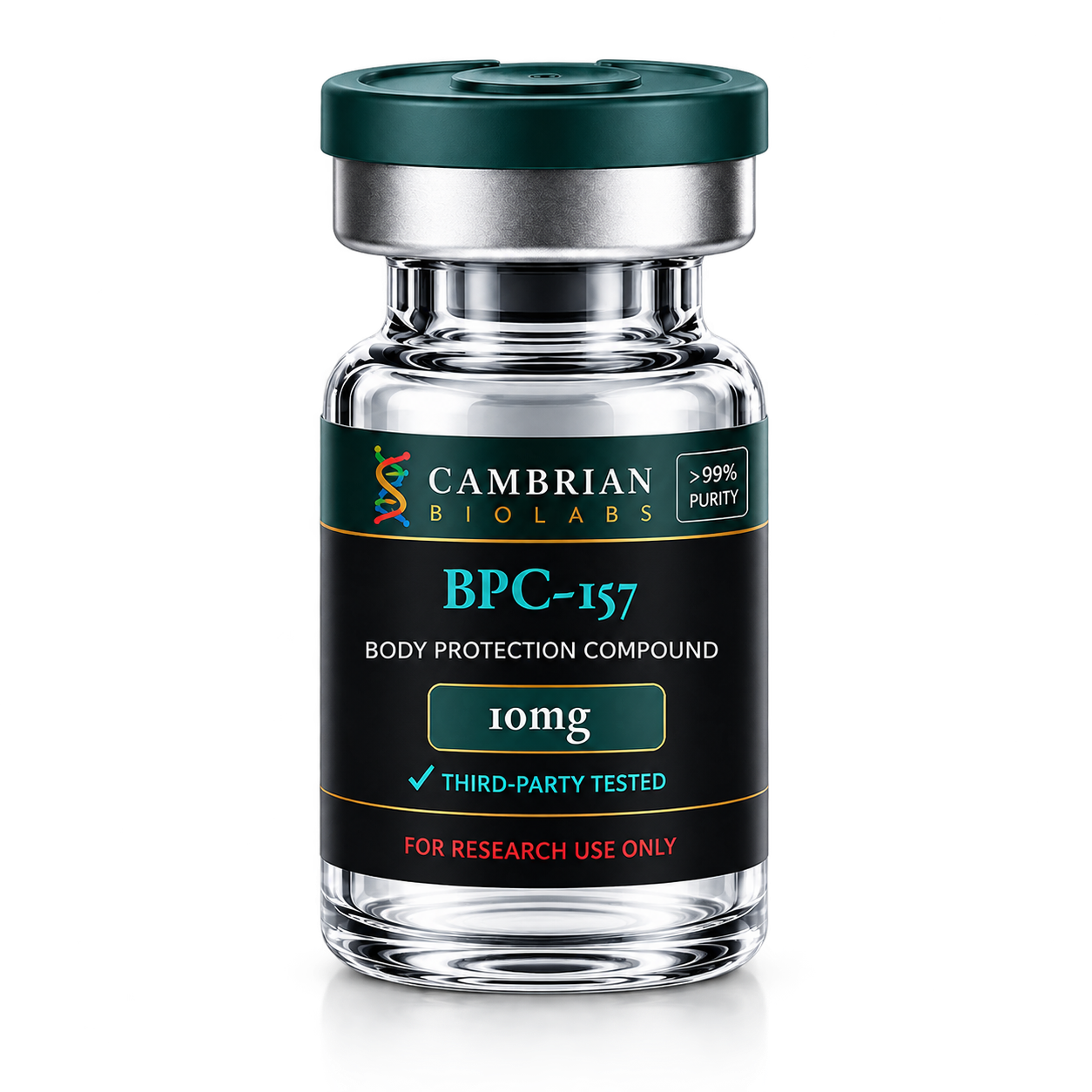
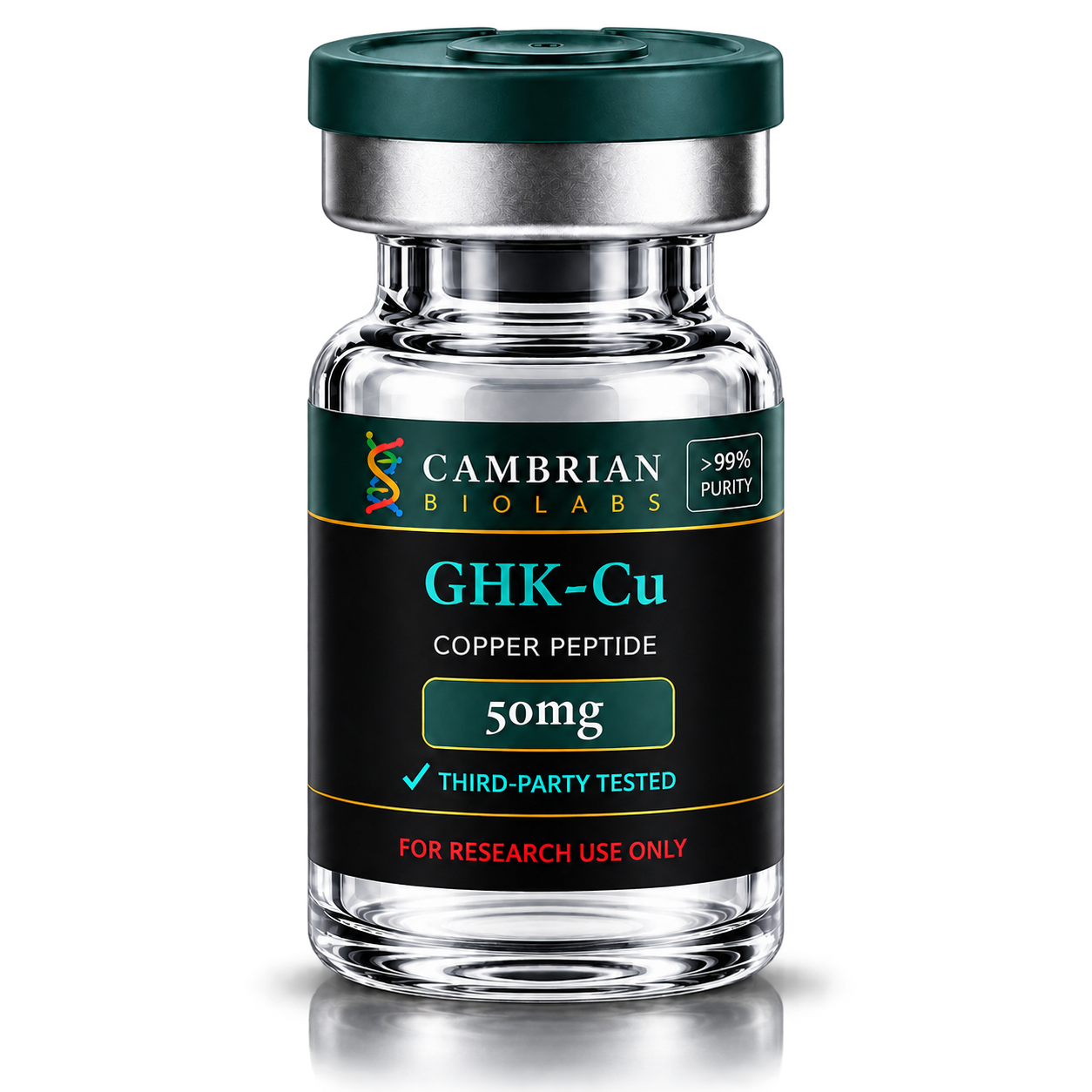
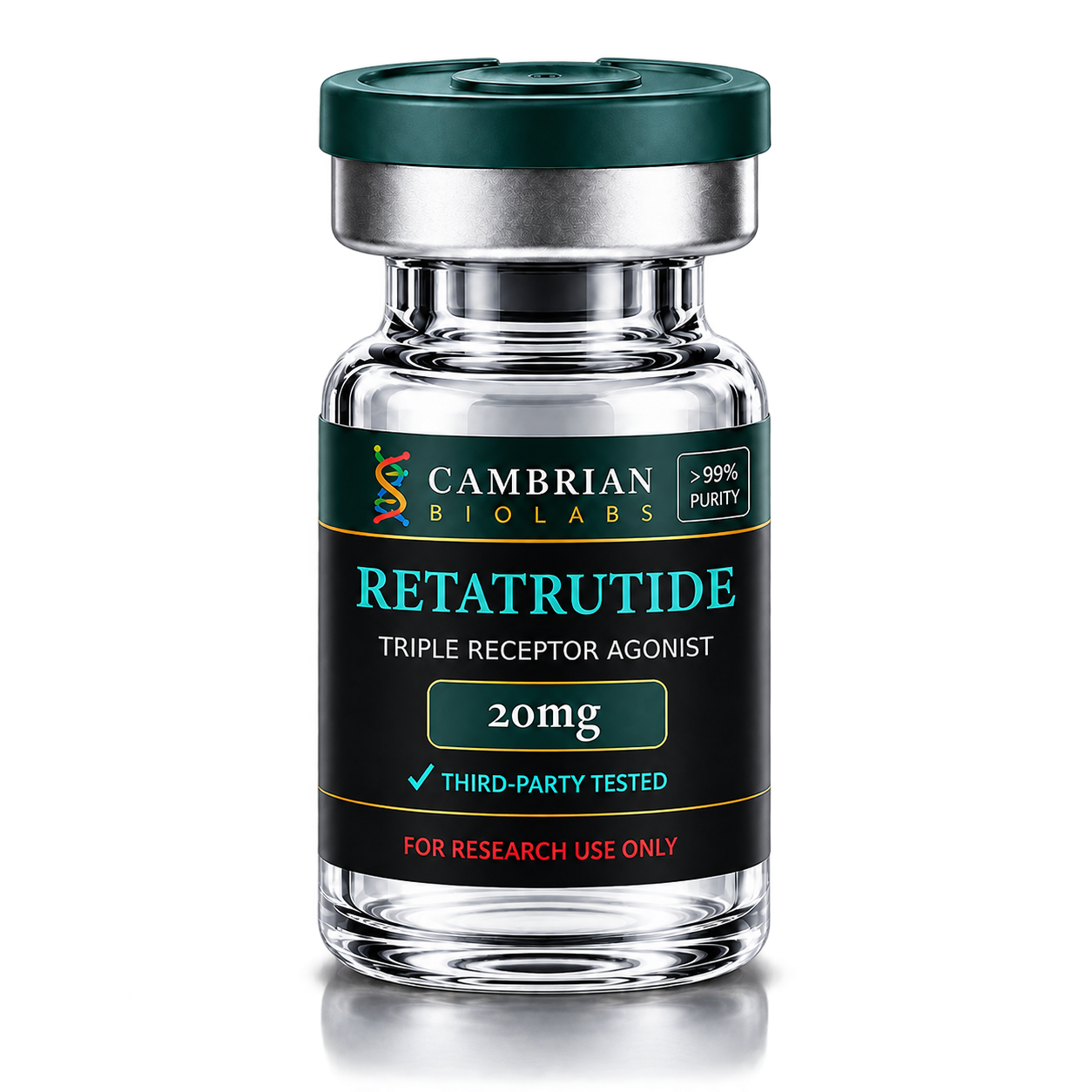
Browse by format, then explore compounds and available strengths.
A closer look at selected products from the Cambrian BioLabs catalogue.
Browse nine compound-specific profiles, research categories, published trial arms and evidence limitations.
Clear product information, transparent research context and a straightforward UK service.
Explore individual product profiles, formats and strength options before adding anything to your basket.
Explore the research library for published scientific context and limitations relevant to each compound.
Our catalogue and educational resources are intended for scientific and laboratory research—not personal administration.
Choose your preferred laboratory research format to browse the current catalogue.
Compare formats, view product details and discover the research compounds in our catalogue.
Peer-reviewed sources, scientific context and clearly stated research limitations.
Each profile separates human clinical evidence from animal, cellular and mechanistic research. This matters because a biological effect in a rodent or cell model does not establish a clinical benefit in people. Where a compound is investigational, unapproved, formulation-dependent or supported only indirectly, that is stated clearly.
This library is educational and intended to support laboratory research literacy. It contains no administration instructions, treatment recommendations or human dosing guidance.
Preclinical literature describes effects involving nitric-oxide signalling, VEGF/VEGFR2-linked angiogenic pathways, fibroblast migration, growth-factor signalling and inflammatory mediators. These are mechanistic hypotheses from laboratory and animal work, not established clinical effects in humans.
A 2025 systematic review of musculoskeletal literature found 35 preclinical studies and only one small clinical study. The human report was uncontrolled and involved 12 people with chronic knee pain, so it cannot establish efficacy or safety. A 2026 development review similarly concludes that clinical development remains rudimentary and that standardized pharmacokinetics, formulations and controlled trials are missing.
Animal studies span tendon, ligament, muscle, bone, gastrointestinal and vascular models. Reported improvements in structural or functional outcomes are hypothesis-generating, but translation from rodent injury models to human disease is uncertain.
Full-length thymosin β4 is an endogenous actin-sequestering peptide involved in cell migration and tissue-repair signalling. Literature describes angiogenic, anti-inflammatory and anti-apoptotic effects in experimental systems. Commercial “TB-500” products may be fragments or related peptides, so molecular equivalence to full-length Tβ4 must not be assumed.
Clinical research exists for full-length thymosin β4 in areas such as dermal wound healing, including small phase 2 programmes. However, recent sports-medicine reviews emphasize that human musculoskeletal evidence for TB-500 itself is lacking. Results from Tβ4 studies therefore provide biological context rather than direct proof for a TB-500 preparation.
Preclinical models report effects on migration, angiogenesis and tissue repair. These studies are useful for pathway research, but fragment identity, formulation and route can materially affect whether findings are relevant to a given research product.
GHK binds copper(II) and has been investigated for effects on extracellular-matrix turnover, collagen and glycosaminoglycan synthesis, metalloproteinase regulation, fibroblast activity, oxidative stress and wound-related signalling.
Some cosmetic and topical literature reports changes in skin appearance or matrix markers, but modern reviews highlight a surprising shortage of rigorous clinical studies and unanswered questions around skin permeability and formulation. Recent sports-medicine reviews find no convincing clinical evidence for injectable musculoskeletal use.
Cell and animal work is extensive relative to human trials and includes wound-healing, fibroblast, collagen, inflammatory and tissue-remodelling models. This supports biological plausibility but not broad clinical claims.
MOTS-c is encoded within mitochondrial DNA and has been linked to cellular stress responses, AMPK-associated metabolic signalling and mitochondria-to-nucleus communication. It is often discussed as a mitokine or mitochondrial-derived signalling peptide.
Human studies show that endogenous MOTS-c can change with exercise. A 2021 Nature Communications study measured increases in skeletal-muscle and circulating MOTS-c after exercise in healthy volunteers. This demonstrates physiological association, not that exogenous MOTS-c treatment reproduces exercise benefits in people. A 2026 systematic review of mitochondrial-derived peptides and exercise described the human evidence base as small and heterogeneous.
Mouse studies report effects on physical capacity, metabolic adaptation, insulin sensitivity and stress responses. These findings underpin current research interest but are not equivalent to proven outcomes in humans.
Retatrutide is designed to agonize GIP, GLP-1 and glucagon receptors. The programme studies how combined incretin and glucagon-receptor signalling affects energy balance, glycaemia, appetite and body weight.
A peer-reviewed 2023 phase 2 randomized trial in 338 adults with obesity reported substantial mean weight reductions over 48 weeks and established the basis for phase 3 testing. By 2026, Lilly had announced positive phase 3 topline results from multiple TRIUMPH studies, including obesity populations with and without type 2 diabetes and cardiovascular disease. Full peer-reviewed publication of every phase 3 dataset may lag company topline announcements.
Mechanistic and preclinical work informed receptor selection and metabolic hypotheses, but the most decision-relevant evidence is now from randomized human trials.
Tirzepatide is a peptide agonist at GIP and GLP-1 receptors. Its pharmacology influences glucose-dependent insulin secretion, appetite/energy intake and metabolic regulation.
SURMOUNT-1 was a large phase 3 randomized trial in 2,539 adults with obesity or overweight without diabetes and demonstrated clinically substantial weight reduction over 72 weeks versus placebo. Tirzepatide also has extensive type 2 diabetes trial data. NICE guidance recognizes tirzepatide (Mounjaro) for managing overweight/obesity and type 2 diabetes in defined NHS populations.
Preclinical receptor pharmacology helped establish the rationale for dual GIP/GLP-1 agonism, but the compound now has extensive human clinical evidence and regulatory review.
CJC-1295 was developed as a long-acting analogue of growth-hormone-releasing hormone (GHRH). Ipamorelin is a growth-hormone secretagogue acting through the ghrelin/GHS receptor pathway. Both can stimulate GH release through different upstream mechanisms, which explains research interest in combined signalling.
A 2006 randomized study of CJC-1295 in healthy adults reported prolonged increases in GH and IGF-1 following the defined investigational analogue. A human PK/PD study of ipamorelin showed a short terminal half-life and a discrete GH-release response. Ipamorelin was also tested in a randomized postoperative-ileus study, where the primary efficacy endpoint was not statistically significant. These studies do not establish efficacy of a retail CJC + ipamorelin blend.
Animal and mechanistic studies explore muscle, endocrine and GH-axis endpoints. Recent reviews describe combination-specific evidence as largely preclinical.
NAD+ (nicotinamide adenine dinucleotide) cycles between oxidized and reduced states in core metabolic pathways and also serves as a substrate for enzymes including sirtuins, PARPs and CD38-related pathways. Ageing and disease-related changes in NAD metabolism are an active research field.
Most modern human intervention evidence concerns NAD+-boosting precursors such as nicotinamide riboside (NR) and nicotinamide mononucleotide (NMN), not direct administration of NAD+ itself. Reviews find that precursor supplementation can raise NAD-related metabolites, but consistent improvements in clinical function or “anti-ageing” outcomes have not been established across populations. A 2025 Nature Metabolism review describes human efficacy as limited and tissue-specific evidence as sparse.
Rodent and cell studies report broad metabolic, mitochondrial, inflammatory and stress-response effects from manipulating NAD metabolism. Translation is complicated because different precursors, tissues and disease states produce different responses.
KLOW combines four compounds with different proposed research pathways: GHK-Cu (copper/matrix signalling), BPC-157 (preclinical repair and nitric-oxide/angiogenic pathways), TB-500/thymosin-related signalling (actin/cell migration context) and KPV (an α-MSH-derived tripeptide investigated for anti-inflammatory signalling). There is no scientific basis to assume the effects of the components simply add together.
No controlled human study of the KLOW blend was identified. Human evidence for BPC-157, TB-500 and GHK-Cu is limited or indirect, while KPV evidence is predominantly cellular and animal. Any claims about the blend therefore need to remain explicitly exploratory.
KPV has been investigated in intestinal epithelial/immune-cell systems and mouse colitis models, including effects involving PepT1 uptake and inflammatory signalling. The other three components have separate preclinical literatures summarized elsewhere in this library.
Explore reported study exposures, experimental models and evidence limits for compounds in the Cambrian catalogue. Every reference identifies what was actually studied — not a suggested regimen.
Organised around the compounds in our catalogue, including vial and pen formats. Identical molecules share one research entry: packaging strength is not a study dose.
Published doses are experimental exposures, not instructions for use. Animal protocols, clinical trials and commercial products are not interchangeable.
No matching research profiles. Try a different search or category.
Amounts recorded in trials or experiments describe that particular design, participant/model, compound identity and quality-controlled preparation.
Cell concentrations, mouse exposures and clinical-trial dosing cannot be substituted for one another or converted into instructions for a different product.
Where no validated human research regimen exists, the profile says so rather than filling the gap with anecdotal internet schedules.
Information is for research literature review only. Cambrian BioLabs does not provide human or veterinary dosing advice. No conclusion about the identity, quality, bioequivalence, safety or efficacy of a Cambrian product follows from a published study of another preparation. Last curated: October 2026.
Clear concentration maths and laboratory volume conversions, without the clutter. Enter your own values and see the workings instantly.
Choose a calculation mode, then enter your values.
Convert a laboratory quantity to its equivalent solution volume.
Use an amount you specify; the calculator does not recommend quantities.
Find the final solution volume needed to achieve a specified concentration.
Measured final solution volume can differ from the volume of liquid added. Use the final value for accurate concentration maths.
1 mg = 1,000 mcg. U-100 reference scale markings are always 100 per mL, independent of scale capacity.
This tool provides arithmetic only. It does not verify compounds or provide dosing, preparation or administration advice.
General laboratory information for research compounds and responsible handling.
Bacteriostatic water is sterile water with 0.9% benzyl alcohol added as a preservative. That preservative is the whole point: it inhibits bacterial growth across multiple punctures of the same vial, which is what makes it suitable for reconstituting a vial you'll draw from more than once.
Plain sterile water or saline don't contain a preservative — once punctured, they should be treated as single-use, since there's nothing stopping contamination from building up over repeated draws. Saline's ionic content can also affect the solubility of some peptide sequences, particularly those with charged residues.
Once bacteriostatic water has passed its opened-shelf-life, or a reconstituted solution is past its stability window or showing signs of degradation, dispose of it responsibly rather than continuing to use it. Used needles, syringes, and vials should go into an appropriate sharps container and be disposed of according to your local regulations for biohazardous or clinical waste — not general household rubbish.
We are currently updating our online payment system. Products can still be browsed and added to your cart, but online payment is temporarily unavailable.
Please check back shortly. Your cart will remain available on this device.